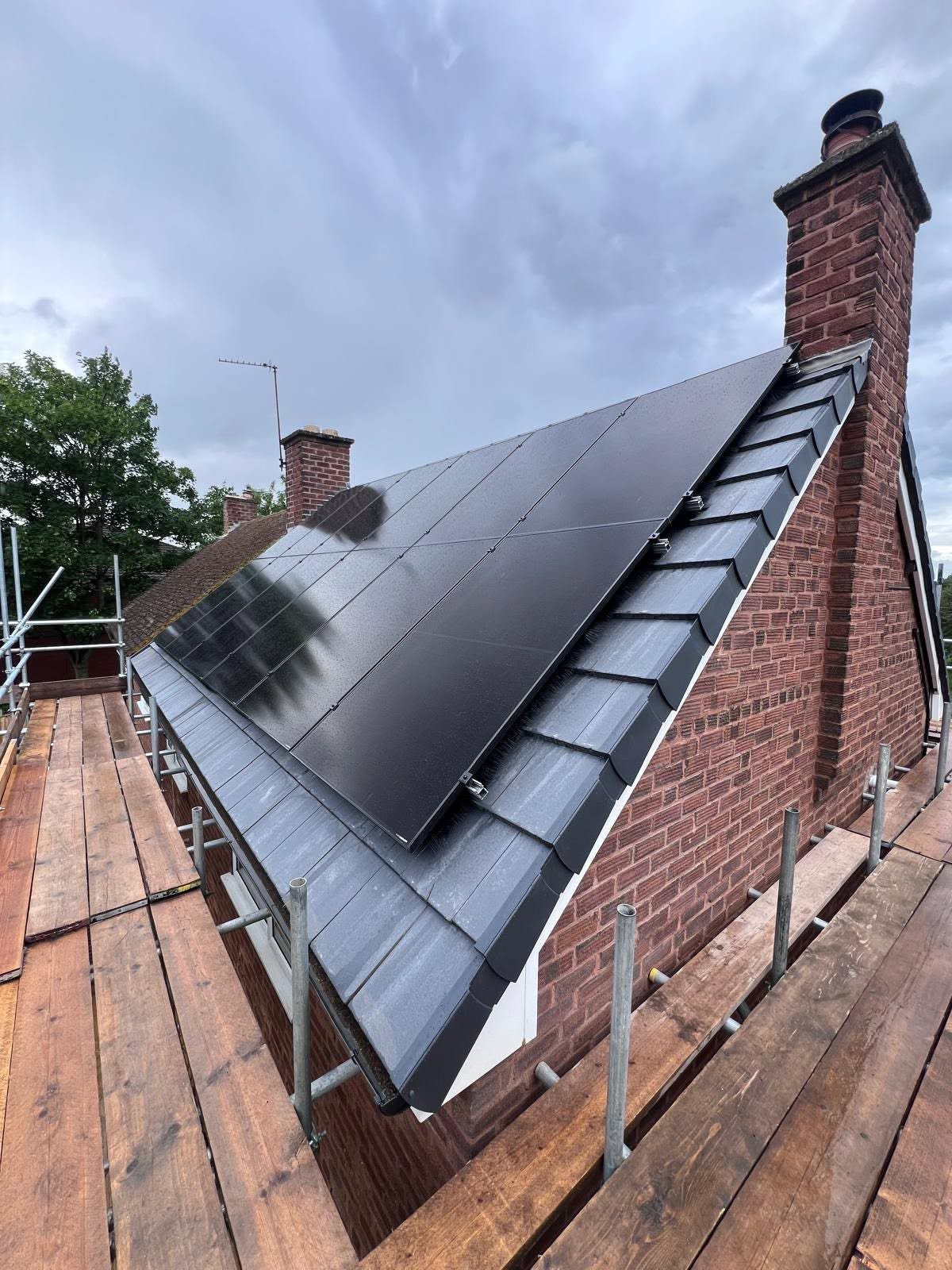
If you are thinking about installing solar panels on your Nottingham home, planning permission is a sensible question to ask before work begins. For many houses, roof-mounted panels can be installed under permitted development rights. That means a separate planning application is usually unnecessary, provided the proposed installation meets the relevant conditions.
The answer changes with the property and the design. A flat roof, a listed building, a home in a conservation area or panels mounted in the garden can all raise different questions. A Nottingham postal address does not necessarily mean that Nottingham City Council is your planning authority, either.
This guide explains the main checks for homeowners considering solar panel installation in Nottingham. It also shows where to find the official guidance before committing to an installation.
When Are Solar Panels Permitted Development?
Permitted development rights allow certain types of work to go ahead without a planning application. The installation of solar equipment on a house can fall within these rights, but the equipment must meet the relevant limits and conditions. The position depends on where the panels will sit, how far they project and whether the property has any additional restrictions.
The Planning Portal’s guidance for solar panels mounted on buildings is the starting point for checking the national rules in England. It explains the requirements for houses, blocks of flats and buildings within their grounds. Nottingham City Council also advises residents that some minor work is permitted development, while encouraging them to check whether their particular proposal needs permission.
An installer can assess the proposed layout, but the property owner should make sure any required planning consent has been established. This is especially useful where the roof has an unusual shape or the property has a protected status.
What Changed in August 2026?
The permitted development rules for domestic solar equipment were updated on 27 August 2026. The Planning Portal says there is a 12-month transitional period, ending on 27 August 2027, during which an installation may follow either the rules in force immediately before the change or the new rules. The complete set of conditions for the chosen route still needs to be met.
That makes older articles about solar planning permission particularly easy to misread. A statement about the previous rules may still be relevant during the transition, but it may leave out the newer route or overlook a condition that applies to your proposed design. Check the current guidance when planning the installation and seek advice from the relevant council if the position remains unclear.
Do Roof-Mounted Panels on a House Need Permission?
Most straightforward installations on house roofs are considered under permitted development rules. For panels on a pitched roof, the Planning Portal says they must not be installed above the highest part of the roof, excluding the chimney, and must not project more than 200mm from the roof slope. Equipment should also be positioned, as far as practicable, to minimise its effect on the building’s appearance and the surrounding area.
The proposed position matters as much as the number of panels. A system that fits neatly within the roof slope may present a different planning question from an arrangement that projects beyond it. Likewise, panels fitted to a wall or roof enclosure need their own assessment. Share the proposed layout with your installer early, particularly if you are considering more than one part of the property.
Planning status is only one aspect of the design. The roof must also be suitable for the equipment it will carry, and the location should be assessed for shading, orientation and the amount of usable space. A layout designed around your property is more useful than selecting a panel count before checking the roof.
What If Your Home Has a Flat Roof?
Solar panels can be installed on flat roofs, but their mounting frames often raise the panels above the roof surface. Under the Planning Portal’s domestic roof guidance, the highest part of the solar PV equipment must not be more than 600mm above the highest part of the flat roof, excluding the chimney.
There is an additional point for flat roofs on designated land, which includes conservation areas. Prior approval from the local planning authority may be required. Prior approval is a specific planning process, so it should not be assumed to mean the same thing as a full planning application. If your Nottingham property has a flat roof and a heritage designation, check the proposal before ordering equipment.
Flat roof design also affects how the panels are secured and arranged. An installer should consider the roof’s condition, loading and exposure alongside the planning limits. If the roof will need work soon, dealing with that first may prevent the panels having to be removed and refitted later.
What Happens in a Nottingham Conservation Area?
Living in a conservation area does not automatically rule out solar panels. It does mean you should check the property’s designation and the exact position of the proposed equipment. The Planning Portal’s current rules include restrictions on certain installations facing a highway, and a flat roof installation on designated land may require prior approval.
Nottingham City Council’s conservation area and listed building guidance provides a way to check whether a city property falls within a conservation area. The council also identifies some areas where Article 4 Directions apply. These can affect permitted development rights, so a general answer about roof panels may be insufficient for a particular address.
The appearance of the proposed array matters here. The position, spacing, colour and visibility of panels may influence which design is appropriate. If you are unsure whether the property has extra controls, ask the local planning authority about the specific roof and proposed layout before work starts.
Are the Rules Different for Listed Buildings?
Yes. Listed buildings need particular care because work affecting their special character may require listed building consent. This is a separate question from whether a proposal needs planning permission.
The Planning Portal’s permitted development guidance also restricts solar equipment on buildings within the grounds of a listed building. Nottingham City Council says listed building consent is needed for most internal and external building work to a listed building. If your home is listed, do not rely on the general rule for an ordinary house roof. Check what consents are needed for the building and the proposed fixing method before installation is arranged.
A careful survey may reveal options that have less effect on the building’s historic fabric or appearance. The right solution will depend on the listing, the available roof space and advice from the planning authority.
What About Panels in the Garden?
Ground-mounted panels are covered by different permitted development rules from panels fixed to a building. The Planning Portal’s stand-alone solar guidance explains the limits for installations within the grounds of a house or block of flats.
For a house under the rules introduced in August 2026, a stand-alone array must be no larger than nine square metres. Height limits depend on its position, particularly its distance from the property boundary and whether it sits forward of the principal elevation. The guidance also sets conditions for designated land and installations near a highway. A garden installation should therefore be checked against its exact proposed position, rather than treated as a roof system placed at ground level.
A ground-mounted system may be worth exploring when a roof is heavily shaded or lacks suitable space. It still needs a suitable location, safe electrical connection and an assessment of how the installation will affect the garden.
Do Flats and Leasehold Homes Need Extra Checks?
If you live in a flat, the planning rules and the right to authorise work need separate consideration. The Planning Portal gives specific permitted development limits for solar equipment on blocks of flats. You may also need permission from a landlord, freeholder or management company before attaching anything to the building.
The same ownership issue can arise with a leasehold house. Even where an installation meets the planning conditions, permitted development rights do not replace consent required under a lease or another property agreement. Establish who owns and controls the roof before spending money on a detailed installation plan.
Shared roofs can involve further discussions about access, maintenance and who will use the electricity generated. Resolving those points at the start makes it easier to decide whether a proposed solar system suits the property.
Does Planning Permission Cover Building Regulations?
No. Planning permission and building regulations address different matters. An installation can be permitted development for planning purposes and still need to meet building regulations.
According to the Planning Portal’s building regulations guidance for solar panels, roof installations will normally be subject to building regulations. The roof’s ability to carry the additional weight must be checked, and electrical work is another relevant consideration. An assessment may show that strengthening work is needed before panels can be installed.
This is why the initial survey matters. Roof condition, structure, access and electrical arrangements all influence the eventual system design. If your roof covering is approaching the end of its useful life, discussing that before installation can save disruption later.
Which Council Should Nottingham Homeowners Contact?
Start by confirming which local planning authority covers the property. Homes marketed as being in Nottingham may fall within the city or a surrounding council area. The applicable national solar rules are an important starting point, but the authority responsible for your address is the one to contact about local designations and a particular proposal.
For properties within the city boundary, Nottingham City Council’s planning permission page explains how to check whether work needs consent. The council also says homeowners who want formal written confirmation that proposed work is permitted development can apply for a Lawful Development Certificate. It notes that this record can be useful when the property is later sold.
If there is uncertainty, describe the proposed installation precisely when seeking advice. The address, roof type, panel position and any known conservation or listed status are more helpful than asking whether “solar panels in Nottingham” generally need permission.
What Should You Check Before Booking an Installation?
Begin with a property survey and a proposed panel layout. Once you know where the equipment would sit, compare that design with the current Planning Portal rules. Check the property’s conservation and listed status, establish whether an Article 4 Direction or another restriction applies, and confirm the appropriate local planning authority.
Next, establish whether the work requires planning permission, prior approval or another consent. Ask how the roof and electrical work will meet the relevant requirements. If the property is leasehold, obtain the necessary agreement from the person or organisation controlling the roof.
These checks should happen before an installation date is fixed. They also create a clearer record of what was proposed and approved, which may be useful when you maintain the system or sell your home.
Plan a Solar Installation Around Your Nottingham Property
For many Nottingham houses, solar panels can be installed without a planning application. The reliable answer, however, comes from checking the proposed design against the current rules and the property’s own restrictions. Heritage status, roof shape and ownership can all change what needs to happen before work begins.
GLSR Solutions designs solar systems around the property and the household’s energy needs. If you are considering solar panels for your Nottingham home, get in touch with GLSR Solutions to discuss a survey and the installation options for your roof.